
As modern cities face increasing challenges in parking management, Benewake lidar technology is helping operators create safer and more efficient parking environments. Their advanced parking lot sensors enable precise vehicle detection and space monitoring, supporting smooth traffic flow in both indoor and outdoor facilities. Designed with stability and sensitivity in mind, these sensors are transforming how parking systems manage real-time vehicle movement, particularly in large commercial or public spaces.
Precision and Stability in Vehicle Detection
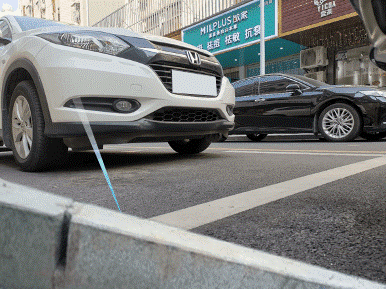
Unlike conventional ultrasonic or camera-based solutions, Benewake lidar sensors deliver millimeter-level accuracy by emitting and receiving laser pulses that measure distance precisely. In the TF-NOVA model, the sensing chip demonstrates extremely high sensitivity—capable of accurately identifying vehicles with glossy or dark surfaces that typically challenge optical sensors. This makes parking lot sensors more reliable in complex lighting or reflective conditions. By improving detection consistency, they reduce false alarms and missed signals, ensuring smoother parking guidance for users and automated systems alike.
Broad Coverage for Dynamic Environments
A defining advantage of Benewake lidar is its wide 14° field of view, which allows the TF-NOVA to cover a substantial portion of each parking space. At a range of 3 meters, one sensor can monitor roughly one-third of a parking bay’s width, providing continuous and accurate vehicle detection even when cars park at steep or irregular angles. These parking lot sensors therefore, optimize space utilization and streamline guidance for intelligent parking systems. Combined with robust environmental resistance, they maintain performance under rain, dust, or strong sunlight—essential for long-term outdoor operation.
Enhancing Smart City Infrastructure
By integrating Benewake lidar into parking management systems, operators gain access to real-time occupancy data and reliable monitoring that supports digital urban mobility. The high detection precision and broad coverage of these parking lot sensors reduce congestion at entry points, minimize human error, and help drivers locate available spaces quickly. Such capabilities align with the broader goal of developing sustainable and connected urban infrastructure.
Conclusion
Through advanced optical sensing and stable performance, Benewake lidar provides the foundation for intelligent parking solutions that improve urban efficiency. Their parking lot sensors redefine accuracy, reliability, and adaptability in modern parking environments, making them a trusted choice for cities aiming to enhance mobility and smart infrastructure.