A classic car can deteriorate even when driven only occasionally, which is why a properly selected SUNJOY metal carport may form part of a realistic protection strategy. Ultraviolet exposure fades paint and interior materials, rain carries dirt into seams, snow adds load and moisture, and falling branches or debris can damage panels and glass.
A Carport limits direct exposure to many of these hazards while preserving the ventilation of an open structure. Metal carports are particularly useful where a full garage is unavailable or where the owner needs quicker access and a less enclosed parking area.
They do not offer the security, temperature control, or wind-driven moisture protection of a traditional garage. Their value lies in reducing routine environmental exposure through a properly sized, drained, and anchored roof.
Reduce Sun, Rain, Snow, and Falling Debris
Continuous overhead cover limits the amount of direct sunlight reaching paint, rubber seals, upholstery, and dashboards. It also keeps much of the vertical rainfall and light snow off the vehicle, reducing the frequency with which water and contamination sit on horizontal surfaces.
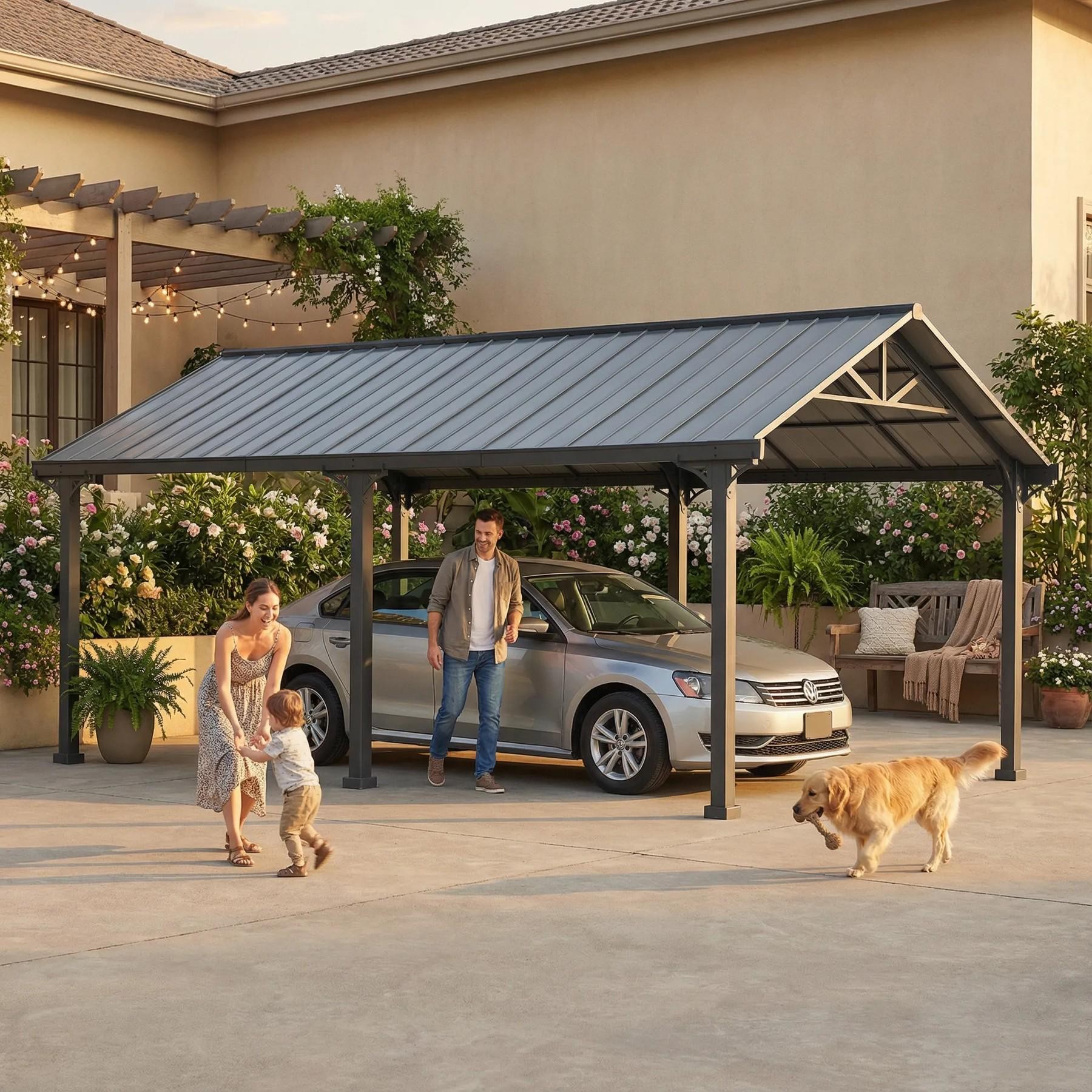
A gable-roof Carport can direct runoff to each side, but drainage must be planned so that water does not splash mud onto the lower body or freeze along the driver’s path. Metal carports should supply enough roof length and width to cover the full vehicle, including mirrors, while leaving room to open doors without striking posts.
Clearance must accommodate antennas, roof racks, or future vehicles. The parking surface should be stable and should slope enough to avoid standing water beneath the car. Although a roof cannot stop every windblown object, it creates a meaningful first layer of protection against common overhead exposure.
Classic vehicles also benefit from reduced temperature cycling. A shaded roof can limit rapid heating of the cabin and painted surfaces, although an open structure will still follow outdoor temperature and humidity. Ventilation remains valuable when moisture has entered after driving.
Recognize the Limits of Open-Sided Storage
An open Carport enables moisture to disperse and makes vehicle access convenient, but wind can still carry rain, snow, dust, and leaves beneath the roof. Orientation matters: placing the more protected side toward prevailing weather can limit intrusion.
Partial side panels may help where allowed, yet they can likewise change wind loading and should be part of the approved design instead of an improvised addition. Metal carports do not prevent theft or vandalism, so classic cars may still require locks, alarms, covers, or separate secure storage for valuable parts.
A breathable vehicle cover can offer supplementary dust protection, but it should be used according to the car’s finish condition and local humidity. Owners should also inspect the carport roof, anchors, bolts, and coatings so that the protective structure does not become a source of rust flakes, leaks, or loose debris.
Roof runoff should be directed away from tires and lower body panels. Splashing from gravel or bare soil can deposit grit along rocker panels, while standing water increases humidity beneath the vehicle. A paved or well-drained base simplifies cleaning and inspection.
Consider a SUNJOY Metal Carport Kit
SUNJOY’s official collection includes ready-to-assemble carport kits with pre-cut parts, hardware, instructions, steel frames, and weather-resistant roofing. Several gable-roof sizes are offered, and the company positions its structures as open-sided alternatives to enclosed garages. A SUNJOY Carport can therefore suit a classic-car owner seeking shade, ventilation, and coverage without constructing a full building.
The exact model requires a check for finished dimensions, post locations, roof clearance, anchoring requirements, and published wind or snow guidance. SUNJOY also notes that carports can serve as work or storage areas, but a vehicle-focused installation should preserve generous door clearance and a safe path to the house. The company provides outdoor shelter solutions for different residential applications; nevertheless, metal carports should be selected and maintained according to their specifications.
Local permits, setbacks, foundation requirements, and exposure conditions remain part of the decision. Future vehicle dimensions deserve consideration. A restoration project may later gain wider mirrors, a roof rack, or a different parking orientation. Allowing generous clearance at the beginning is safer than placing posts at the minimum distance around the present car.
A metal carport is essential when “essential” is understood as A realistic layer of risk reduction instead of complete protection. It can shield a classic car from much of the sun, vertical rain, light snow, and overhead debris that accelerate cosmetic aging.
Proper dimensions, drainage, anchoring, and inspection determine how well that protection works. Because open sides remain exposed to wind and security risks, the owner may need additional measures. Within those limits, a well-chosen Carport offers a sensible way to preserve the vehicle while keeping it accessible and ventilated.
A SUNJOY Carport can supply that measured layer of coverage when its size, foundation, and model-specific guidance suit the vehicle and the property. The car itself should still receive normal preservation care. Washing, drying seams, maintaining weather seals, controlling battery condition, and checking for condensation remain necessary because overhead shelter limits exposure but does not create a controlled museum environment.
A fire extinguisher, adequate lighting, wheel chocks, and clear access around the vehicle further enhance routine safety during maintenance, cleaning, or inspection throughout the year. Regular inspection of the roof, fasteners, drainage path, and parking surface preserves both the shelter and the vehicle beneath it. Households considering metal carports can apply the same criteria to SUNJOY.